How to Wash Oversized T-Shirts at Home in India Without Shrinking or Ruining Them
Wash oversized t-shirts in cold water (30°C or below), turned inside out, on a gentle cycle — then air dry flat or on a hanger away from direct sunlight. That single habit keeps an oversized tee looking and fitting the same after 50 washes as it did on day one. Everything else in this guide is about why that works, and what specifically goes wrong when you skip it.
This matters more than most people think. India has some genuinely rough conditions for cotton clothes — hard water in most cities, direct sun drying on terraces, monsoon humidity that can leave wet fabric sitting for hours. If you've bought a 240 GSM oversized tee and it shrunk after three washes, it probably wasn't the tee's fault. Here's what to do instead.
How Do You Wash an Oversized T-Shirt Correctly?
Turn it inside out, wash in cold water with a mild liquid detergent, use a gentle or delicate cycle if machine washing, and air dry away from direct sunlight. For heavy oversized tees (220 GSM and above), dry flat for the first few washes to prevent the fabric weight from stretching the neckline while wet. Never put a cotton oversized tee in a dryer on high heat — cotton fibres contract under heat and the shrinkage is permanent.
The First Wash Is the Most Important One
Most people don't think about this, but the first wash sets how your tee behaves for the rest of its life. Here's what to do before you wear it the first time:
Wash alone or with similar colours. A brand-new cotton tee — especially one with natural or reactive dyes — will bleed a little in the first wash. Not a lot, but enough to tint a white tee light pink if you toss everything in together. Keep the first wash separate.
Cold water only. Hot water causes the cotton fibres to contract. This is when most "it shrank in the wash" situations actually happen — the first or second wash in warm water. After that, whatever shrinkage was going to happen has happened. The trick is to not give it the chance.
Don't use too much detergent. Half a cap is genuinely enough for a tee. Too much detergent means residue stays in the fabric after rinsing, which makes cotton feel stiff, slightly slimy, and weirdly heavy. Indian washing machine cycles tend to under-rinse compared to European standards, so excess detergent compounds this.
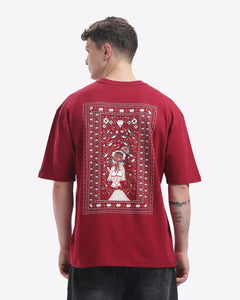
For block-printed tees: Always wash the first time alone. Block-print dyes — especially natural or low-fixation ones — bleed more than screen-print inks. The colour you see in the water after the first wash is normal; it's excess unfixed dye, not your print fading. After the first wash, bleed is minimal.
Machine Wash vs. Hand Wash: Which Is Better for Heavy Cotton Tees?
| Method | Best For | Risk | India Context |
|---|---|---|---|
| Machine wash (gentle/delicate cycle, cold) | Solid tees, plain cottons, everyday washes | Agitation can slightly wear down graphic prints over time | Works fine; use a laundry bag for graphic tees to reduce friction |
| Hand wash | Block-print tees, graphic tees, first wash of anything new | Essentially none if done in cold water | Best method in Indian hard-water conditions; you control everything |
| Tumble dry (high heat) | Not recommended for cotton oversized tees | Permanent shrinkage; graphic cracking | Most Indian homes don't have dryers; this is actually an advantage |
For most everyday oversized tees from the oversized t-shirts collection, the gentle machine cycle in cold water works perfectly. Use a mesh laundry bag (₹60–₹150 online, worth every rupee) if your machine has a vigorous drum rotation. The bag reduces the abrasion that, over 50 washes, will dull the print surface on a graphic tee.
Hand wash is the better choice for the Chaap block-print collection specifically, especially the first 3–4 washes. Fill a bucket with cold water, add a small amount of mild liquid detergent, submerge the tee, and squeeze gently rather than scrubbing. Rinse twice. The whole thing takes under 5 minutes.
The Indian Apartment Drying Problem (and How to Fix It)
Most Indian homes have one of three drying situations: a terrace with full direct sun, a balcony with partial sun, or an indoor drying rack near a window. Each creates a different risk for cotton tees.
Terrace direct sun: Fast drying, great for killing bacteria. Bad for colour longevity — UV radiation breaks down dye molecules, especially reds, blues, and greens. If you're drying graphic tees or coloured solids on a terrace, dry them inside out. The inside of the tee facing the sun, the outside protected. This alone extends colour life by years.
Balcony / partial sun: Best of both worlds for most tees. Decent airflow, some UV protection. Hang right-side up on a good hanger (the wide-shoulder type, not a thin wire hanger that creates shoulder bumps). Inside out is still recommended but less critical than open terrace.
Indoor drying (monsoon season): This is where mildew becomes the problem. A wet 240 GSM tee hanging in humid indoor air for 8+ hours in July or August can start developing a musty smell even if it doesn't visibly mould. Two solutions: put a table fan pointed at the hanging clothes, or add 2 tablespoons of white vinegar to the rinse cycle — white vinegar is a natural mildew inhibitor and doesn't leave a smell once the fabric dries.
Flat drying for heavy tees: Specifically for 220 GSM+ oversized tees, the first few washes are best done by laying the tee flat on a clean dry towel. When a heavy cotton tee is fully saturated, the weight of water pulling the fabric down while it hangs can stretch the neckline and shoulders over time. Flat drying for the first 3–5 washes eliminates this risk. After that, the cotton has settled and hanging is fine.
Detergent Choices: What Actually Works in Indian Conditions
India's mainstream detergents are formulated for heavily soiled cotton — think kurtas, bedsheets, heavy-use work clothes. Most are too aggressive for fine 240 GSM ring-spun cotton. The high phosphate content in many Indian powder detergents is particularly rough on dyed cotton: it strips colour faster and stiffens the fabric over time.
For quality cotton tees, use liquid detergent over powder. Ariel Matic Liquid works well. Surf Excel Liquid or the "Surf Excel Gentle" variant is a decent mid-range option. If you're washing block-printed or naturally dyed tees, a dedicated "handwash" liquid (Genteel still works, or any mild handwash formulation) is gentler than matic versions.
Amount: one teaspoon for hand wash in a bucket, half the recommended cap for a full machine load. Less is genuinely more here.
One product worth having: white vinegar. A capful in the final rinse helps with three things — it neutralises detergent residue that makes cotton feel stiff, it helps lock colour, and it prevents the musty smell in monsoon-season laundry. Doesn't leave any smell on the fabric once dry.
Caring for Different Print Types on CartoonPanti Tees
Not all prints need the same treatment. Here's the quick breakdown:
Screen-printed tees (Indie Vibes, Mood Tee, Rush, Nostalgia): Inside out, cold water, gentle cycle. Screen-print ink is durable — 80–100+ washes under normal conditions. The main risk is cracking from heat and friction, not water. No fabric softener, as it coats the ink surface and speeds up cracking. I've washed screen-printed tees 40+ times with this method and the prints are still clean.
Block-printed tees (Chaap collection): Cold water, hand wash for first 3–4 washes, always inside out, no fabric softener, shade dry. Natural-dye block prints behave differently from synthetic inks — they don't crack, but they can fade if you give them enough UV exposure over time. The upside: well-cared-for natural-dye block prints develop a lovely patina rather than looking washed out. A Chaap tee after 20 careful washes has more character than it did new.
Solid tees (solid-color tees, men's plain tees): The most forgiving. Inside out, cold wash. No print to worry about, so the focus is purely on colour retention and fabric feel. White tees: add a half-cap of white vinegar in the rinse every few washes to prevent yellowing, which is caused by detergent residue + body oils building up in the fabric.
The Hard Water Problem Nobody Talks About
India's tap water is hard in most cities — Bhopal, Delhi, Mumbai, Bengaluru, Hyderabad all have calcium and magnesium mineral content that's noticeably higher than soft-water regions. Hard water leaves mineral deposits in fabric after washing. Over time, these deposits make cotton feel stiff, give white cotton a yellowish tinge, and can dull colours by creating a physical film over the dye.
You can't completely fix this without a water softener, but you can mitigate it. The white vinegar rinse trick removes mineral deposits the same way it removes limescale from kettles — the mild acidity dissolves the calcium/magnesium salts. Doing a vinegar rinse every 3–4 washes on your good tees is genuinely one of the better fabric-care habits you can build. The tees come out softer, brighter, and smell cleaner even without fragrance.
If you're in a very hard-water area (water leaves white rings on your bucket), consider a brief hand-rinse with mildly diluted vinegar water as a final step even after machine washing.
Storage: The Overlooked Part of Care
How you store an oversized tee matters nearly as much as how you wash it. Two main rules:
Fold, don't hang for storage. A 240 GSM oversized tee hanging in a cupboard on a thin hanger for two months will develop shoulder bumps that don't come out. Fold and stack flat — the heavier the fabric, the more important this is.
Don't over-stack. A pile of 8 tees with 6 kg of other clothes on top of them will slowly compress and crease the bottom ones. Keep tee stacks to 5–6 max, or store them vertically (rolled, file-folder style) so you can see all of them without disturbing the pile. This also means you actually rotate through all your tees rather than always reaching for the top one.
Frequently Asked Questions
Will an oversized t-shirt shrink after washing?
It can, but only if you wash in hot water or dry on high heat. Cotton fibres contract under heat — cold water washing and air drying eliminate essentially all shrinkage risk. 240 GSM combed cotton oversized tees are more dimensionally stable than thin cotton (160–180 GSM) because the higher yarn count gives the structure more to hold onto. The main shrinkage risk for heavy oversized tees is the first wash in warm water; get that right and the rest follow.
Should I wash an oversized t-shirt inside out?
Yes, for every wash. Turning a tee inside out means the print faces inward, away from drum friction and UV exposure. This is the single most effective habit for extending print life on graphic tees. It also protects the outer surface of the fabric from abrasion that causes pilling over time, especially on ring-spun cotton. Takes two seconds. Do it every time.
How do I stop my t-shirt from smelling musty in monsoon season?
The musty smell comes from mildew — bacteria that thrive in wet fabric sitting in humid air for too long. Fix it two ways: dry faster (point a fan at wet clothes) and add 2 tablespoons of white vinegar to the final rinse. White vinegar is mildly acidic and kills mildew bacteria without damaging the fabric or leaving any smell after drying. If a tee is already smelling musty, soak it for 30 minutes in a bucket of cold water with half a cup of white vinegar before washing as normal.
How often should I wash an oversized t-shirt?
After every wear if you've sweated in it or eaten while wearing it; every 2–3 wears if it was a light-use day. The more you wash any cotton garment, the more it ages — not disastrously, but the colour fades slightly with each wash, and the fibres wear down over hundreds of washes. Spot cleaning a small mark instead of washing the whole tee is the right call when possible. For India's climate, err on the side of washing after each wear in summer (May–August); in winter you can stretch to 2–3 wears.
Can I use fabric softener on cotton oversized t-shirts?
Skip it. Fabric softener deposits a coating on cotton fibres that reduces breathability, weakens the structure over time, and on printed tees, sits between the ink and the surface light hits — slowly changing how the colour reads and accelerating print cracking. Cotton doesn't need softening if you're washing in cold water and using a mild detergent. If you want softer fabric, the white vinegar rinse achieves a similar result without the downsides.
Independence Day Outfit Ideas India: How to Dress for August 15 Without Looking Like a Flag
Oversized Polo T-Shirt vs Regular Polo in India: What Actually Differs and Which One to Buy
Related Posts

Why Is Everyone Wearing Oversized Clothes? A Short History, and What It Means in India

What to Wear to a Friend's Shaadi in India: Haldi to Sangeet, Without Renting a Sherwani

Diwali Gift Ideas Under ₹1,000 for Brother and Friends: What Actually Works

What Is a Drop Shoulder T-Shirt? How to Spot a Real One

Best GSM for a Hoodie in India: 300 vs 400 vs 500 Explained

Oversized vs Regular Fit T-Shirt: Which One Should You Buy?

Casual Diwali Outfit Ideas 2026: 7 Looks for the Whole Festive Week