What Is Block Print Fabric? India's Ancient Craft on Modern Streetwear Tees
What Is Block Print Fabric? India's Ancient Craft on Modern Streetwear Tees
Block print fabric is cloth printed using hand-carved wooden blocks dipped in natural or synthetic dyes and stamped onto the textile by hand. Each print is slightly unique — that's not a defect, it's literally what you're paying for. No two block-printed tees look exactly the same, which makes it the opposite of everything coming off a factory press right now.
If you've seen the Chaap collection and wondered why the prints look different from a regular graphic tee, this is why. Let's break down what block printing actually is, where it comes from in India, and why it's showing up on streetwear tees in 2026.
What Is Block Printing?
Block printing is a textile printing technique where artisans carve intricate designs into wooden blocks, dip the blocks into dye, and press them onto fabric by hand to create repeating patterns. The craft has been practised in India for over 400 years. Each block press requires precise alignment, consistent pressure, and skilled hands — it can't be replicated by a machine at the same quality.
Where Block Printing Comes From in India
Rajasthan is the epicentre. Two towns in particular — Sanganer and Bagru, both near Jaipur — have been doing this for generations. The artisans (traditionally from the Chippa community) migrated from Gujarat to Rajasthan sometime in the late 16th century and built the craft into what it is today.
Sanganeri block printing got a GI (Geographical Indication) tag in 2009. Bagru block printing followed in 2011. That's the government officially recognising these as origin-protected crafts — the same category as Darjeeling tea or Alphonso mangoes. You can read more about the Sanganeri tradition on the Incredible India government portal.
Beyond Rajasthan, Madhya Pradesh has the Bagh print tradition — natural dyes, geometric and floral patterns, a completely different visual language from Sanganer's fine floral work. Gujarat has its own block print heritage through the Ajrakh technique. Each region developed differently based on which dyes were locally available and what the textile trade demanded.
The 3 Main Block Print Styles You'll Actually See on Clothes
| Style | Origin | Visual Character | Base Fabric | GI Tag |
|---|---|---|---|---|
| Sanganeri | Sanganer, Rajasthan | Fine floral patterns on white/off-white; delicate lines, detailed fills | Cotton, silk | 2009 |
| Bagru | Bagru, Rajasthan | Bolder geometric and floral prints; earthy tones from natural dyes | Cotton, mulmul | 2011 |
| Bagh | Bagh, Madhya Pradesh | Geometric patterns, red-black natural dye palette, resist-print technique | Cotton, silk | 2011 |
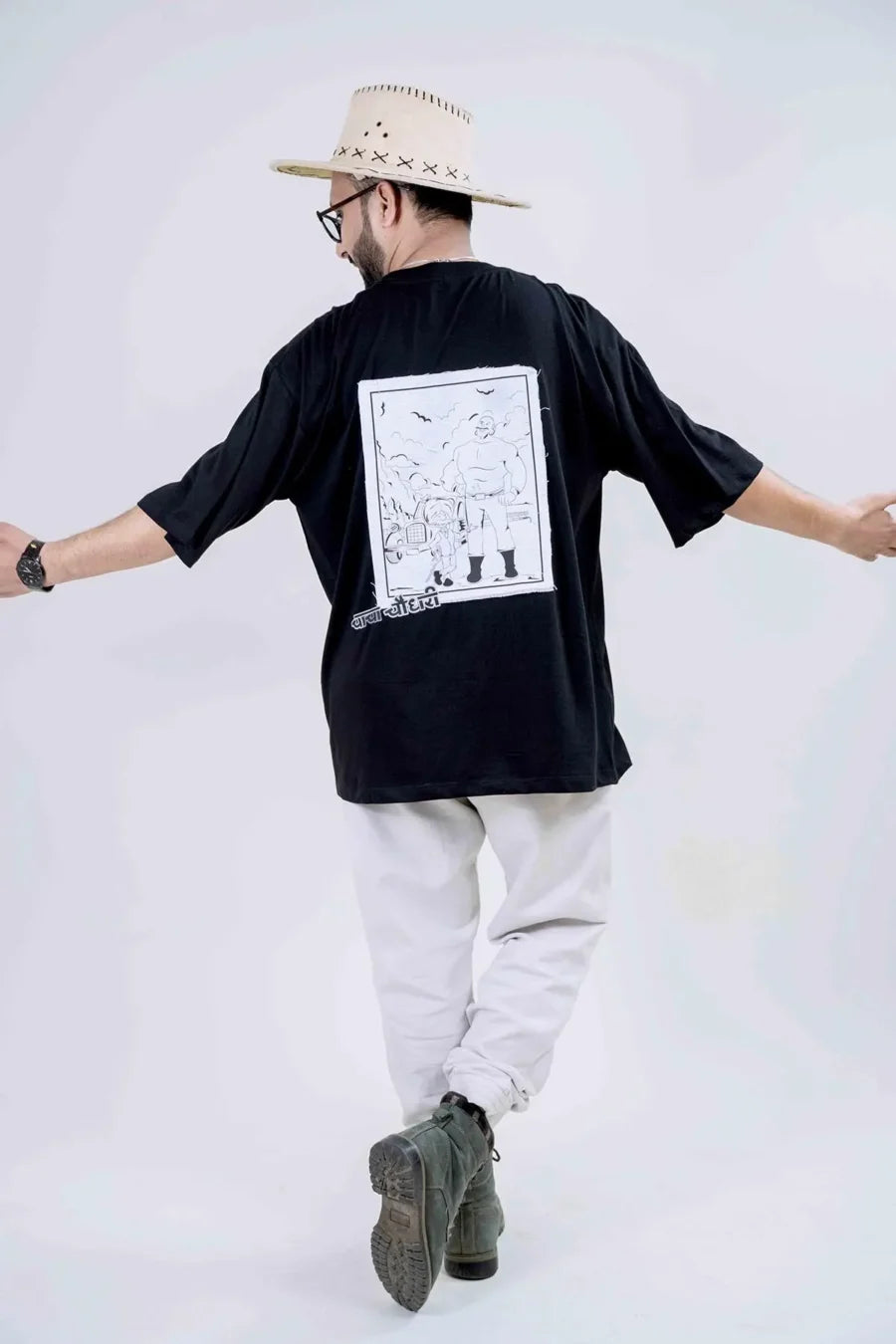
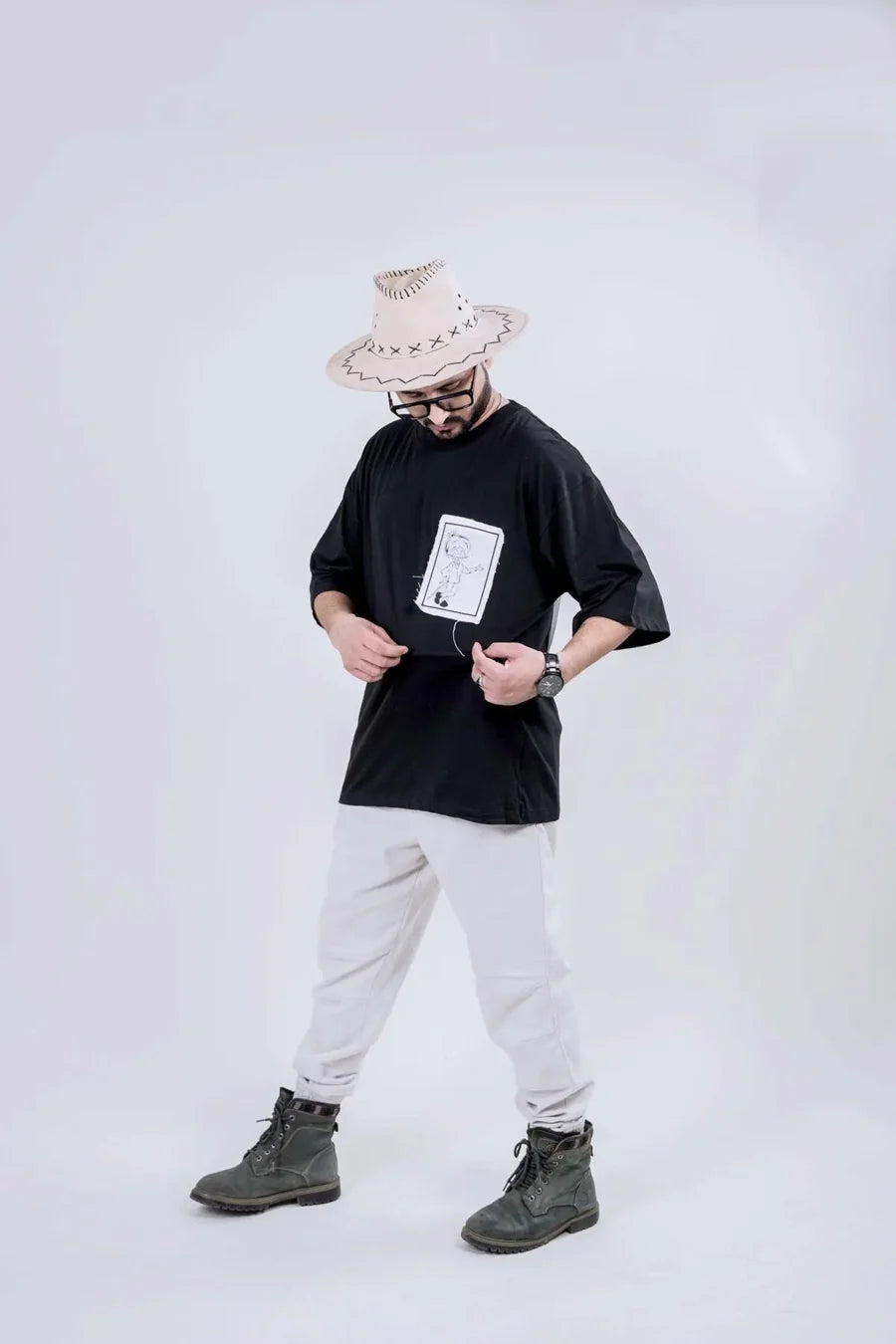
Streetwear tees today draw from all three traditions but tend to adapt the motifs rather than replicate them exactly — taking the visual grammar (geometric repeats, floral fills, bold negative space) and applying it to contemporary oversized silhouettes. The Chaap collection at CartoonPanti does exactly this: original block-print designs made in collaboration with craftspeople, applied to 240 GSM oversized cotton tees. Not a reprint of a traditional pattern — new art made using a traditional method.
How the Block Printing Process Actually Works
Most people think block printing is simple: press, lift, repeat. It's not.
The wooden block is carved by hand from teak or sheesham wood — detailed motifs can take days to carve. Before printing begins, the fabric is washed, treated with a mordant (usually alum or iron) that helps the dye bond, and stretched flat. The dye tray is prepared — traditionally henna, indigo, madder root, or pomegranate rind for natural dyes; today often a mix of natural and reactive dyes depending on the brand and price point.
Then the printer dips the block, aligns it by eye against the previous impression (there's no machine guide), and presses with consistent force. For a complex design, multiple blocks are used in sequence — one block for the main motif, another for the outline, another for fill colours. A kurta with a three-colour block print can take 45–60 minutes of printing alone, not counting drying time between layers.
The slight misalignment, the minor variation in dye uptake from one press to the next — that's what gives block print fabric its handmade feel. When you look closely at a block-printed tee and see that the pattern's edges aren't machine-perfect, that's not a QC issue. That's the print being honest about how it was made.
Block Print vs. Screen Print vs. DTF: What's Different on a Streetwear Tee
| Method | How it works | Output feel | Wash durability | Min. quantity | Typical cost/tee |
|---|---|---|---|---|---|
| Hand block print | Wooden block + dye, hand-pressed | Slight texture, soft, natural variation | 50–80 washes (varies by dye fixation) | 1 (fully hand-done) | ₹900–₹1,800+ |
| Screen print | Ink pushed through mesh screen onto fabric | Flat, consistent, slightly raised on fabric | 80–100+ washes | 50–100 units | ₹700–₹1,100 |
| DTF (Direct-to-Film) | Design printed on film, heat-transferred to fabric | Smooth, photo-quality detail, slightly plasticky feel | 30–50 washes | 1 unit | ₹500–₹900 |
Block printing isn't the most durable of the three — screen printing on 240 GSM combed cotton wins on wash count. But block print gives you something screen printing can't: a textile tradition behind the garment. When you explain to someone what Sanganeri block printing is, the tee becomes a different object. That context is part of what you're wearing.
Block print also works better on natural dyes than screen printing does — and natural dyes (especially indigo and madder-based) develop a patina with washing rather than fading uniformly. A block-printed indigo tee after 20 washes often looks better than it did new. Screen-printed tees don't behave that way.
How to Care for a Block-Printed T-Shirt
This is where most people make mistakes, and it's why block-printed tees sometimes get a reputation for fading early.
First wash: always cold water, always inside out, always by itself or with similar-colour items. Block print dyes — especially natural ones — will bleed a little in the first wash. That's expected. Don't panic, don't wash it with your white tee.
After that: cold or lukewarm water (under 30°C), mild detergent, no fabric softener. Fabric softener deposits a coating that sits between the dye and light — over time it changes how the colour reads. Handwashing is ideal; if machine washing, use the delicate cycle.
Drying: dry in shade, not direct sunlight. UV breaks down natural dyes faster than washing does. Hanging inside out in indirect light extends the colour by years, not just months. I've washed block-printed fabric 30+ times with this method and the colour is still rich.
Ironing: medium heat, always on the reverse side. Never iron directly on the printed surface — you'll flatten the texture and in some cases lift the dye if it's a reactive synthetic.
Why Block Print Is Having a Moment in Indian Streetwear Right Now
The timing isn't random. A few things converged.
Gen Z in India is done with licensed IP — wearing a Marvel character or a global streetwear brand's logo feels like renting someone else's identity. The appetite is for something that belongs here. Block print has a provenance argument that's extremely hard to fake: it's Indian in origin, Indian in execution, Indian in craft history. That's a real differentiator in 2026, not a marketing angle.
There's also a practical quality argument. At the same price point, a block-printed tee from a brand working with actual craft communities takes more labour to make than a screen-printed tee. You're paying for skilled human time in a way that the market generally doesn't price in. For a consumer who thinks about what they're buying — and this consumer exists and is growing — that's meaningful.
And honestly, the aesthetic is just good right now. Bold geometric block-print motifs on an oversized drop-shoulder silhouette look clean. The slight print variation gives the garment character without being noisy. Campus-to-coffee, it works. Check the Chaap block-print tees to see what this looks like in practice, or browse best sellers to see which designs the CartoonPanti community has voted most on.
If you're more into screen-printed original art, the Indie Vibes and Mood Tee collections are the screen-print equivalents — same 240 GSM combed cotton, same original illustration, different technique. And the full oversized collection has both.
Frequently Asked Questions
What is block print fabric?
Block print fabric is textile printed by hand using carved wooden blocks dipped in dye and stamped directly onto the cloth. Each impression is slightly unique, making the design inherently handmade. India is the world's largest producer of hand block-printed fabric, with major craft centres in Rajasthan (Sanganer, Bagru) and Madhya Pradesh (Bagh).
Is block print fabric good quality?
Yes, when made properly. The quality depends on three things: the base fabric (cotton GSM and yarn type), the dye quality (natural vs. synthetic reactive), and the fixation process (whether the dye is properly mordanted and steamed to bond). Block-printed fabric on 240 GSM combed cotton with properly fixed reactive dyes lasts 50–80 washes without significant fading if cared for correctly.
How do I wash block-printed clothes without fading them?
Cold water, inside out, mild detergent, no fabric softener. First wash alone or with same-colour items — expect minor bleeding. Dry in shade, not direct sunlight. Medium-heat iron on reverse side only. This method extends the print life significantly. Natural-dye block prints especially need cold-water washing since heat accelerates dye breakdown in natural pigments.
What's the difference between Sanganeri and Bagru block print?
Sanganeri block printing (GI tag 2009) is known for fine floral patterns on white or off-white backgrounds — delicate, detailed, traditionally used on sarees and dress fabric. Bagru block printing (GI tag 2011) uses bolder, more geometric patterns with earthy tones from natural clay and iron-based dyes. Both are from Rajasthan. Streetwear applications tend to adapt Bagru-style bolder motifs more easily to contemporary garment shapes.
Why are block-printed t-shirts more expensive than regular printed tees?
Because they take significantly more skilled human labour. A three-colour block-printed tee requires hand-carving multiple wooden blocks (a process that takes days), preparing the fabric with mordants, hand-pressing each block in sequence with proper alignment, and drying between colour layers. A screen-printed tee at scale uses machines for most steps. The ₹200–₹400 price difference on a block-print tee vs. a screen-print tee is almost entirely artisan time.